Trades come in all shapes in sizes in baseball, from all-in moves, to total tear-downs, to three-team deals and minor upgrades.
Some trades are safer than others for general managers, but few truly come without any risk. In a volatile sport that sees stars quickly fade and little-known prospects regularly emerge as valuable pieces, it doesn’t take much for a deal to go awry.
These trades, however, are the most lopsided in baseball history.
Here’s a look at MLB’s worst trades, from Babe Ruth to Pete Crow-Armstrong.
MORE: SN predicts the 2026 World Series
14. Jose Bautista for Robinzon Diaz, 2008
- Blue Jays receive: Jose Bautista
- Pirates receive: Robinzon Diaz
The Pirates can probably get a pass on this one, as Jose Bautista was a 27-year-old utility player on his fourth team when they shipped him to the Blue Jays for a player to be named later — Robinzon Diaz, ultimately — during the 2008 season.
Come 2010, Bautista came out of nowhere to hit 54 home runs for the Blue Jays. He would follow it up with an MLB-leading 1.056 OPS in 2011, and Bautista remained one of the AL’s best all-around hitters through the 2015 season. While the Blue Jays didn’t reach a World Series with Bautista, back-to-back ALCS appearances and an iconic postseason home run in 2015 helped make him a franchise great.
Diaz, meanwhile, appeared in 43 games for the Pirates, hitting one home run. It’s tough to pin the blame on Pittsburgh, but the Bautista deal turned out to be horribly one-sided.

© Pablo Robles-Imagn Images
13. Junior Caminero for Tobias Myers, 2021
- Rays receive: Junior Caminero
- Guardians receive: Tobias Myers
The Rays have to be careful with Junior Caminero knowing his long-term price is skyrocketing, but he’s already put together two of the best seasons in franchise history and could lead the team to its first World Series win. That’s well worth what they gave up to get him when he was just 18.
The Guardians had only seen 43 professional games from Caminero when they traded him for pitcher Tobias Myers in 2021. Myers, who was 23 at the time, also hadn’t made his MLB debut, and it never came in Cleveland. Myers was designated for assignment in July of 2022 after posting a 6.00 ERA across 14 minor-league starts, and the Guardians traded him to the Giants for cash considerations.
While Myers broke through with the Brewers in 2024, the Guardians got effectively nothing for a player who is now one of the best young talents in the sport.
MORE: Revising Guardians’ lopsided trade of Junior Caminero
12. Pedro Martinez for Delino DeShields, 1993
- Expos receive: Pedro Martinez
- Dodgers receive: Delino DeShields
The Dodgers knew they had something in Pedro Martinez, but they didn’t view him as a starter when he first arrived in the majors. After a solid season as L.A.’s set-up man in 1993, the young Martinez was traded to the Montreal Expos for second baseman Delino DeShields in a deal the Dodgers lived to regret.
Martinez would earn the NL Cy Young Award with the Expos in 1997, morphing from a valuable front-of-the-rotation arm into a legitimate ace before being traded to the Red Sox. While Martinez only spent four seasons of his Hall of Fame career in Montreal, the Dodgers only got three uninspiring seasons out of DeShields and would have liked to keep Martinez in their grasp if they could do it all over again.

David Banks-Imagn Images
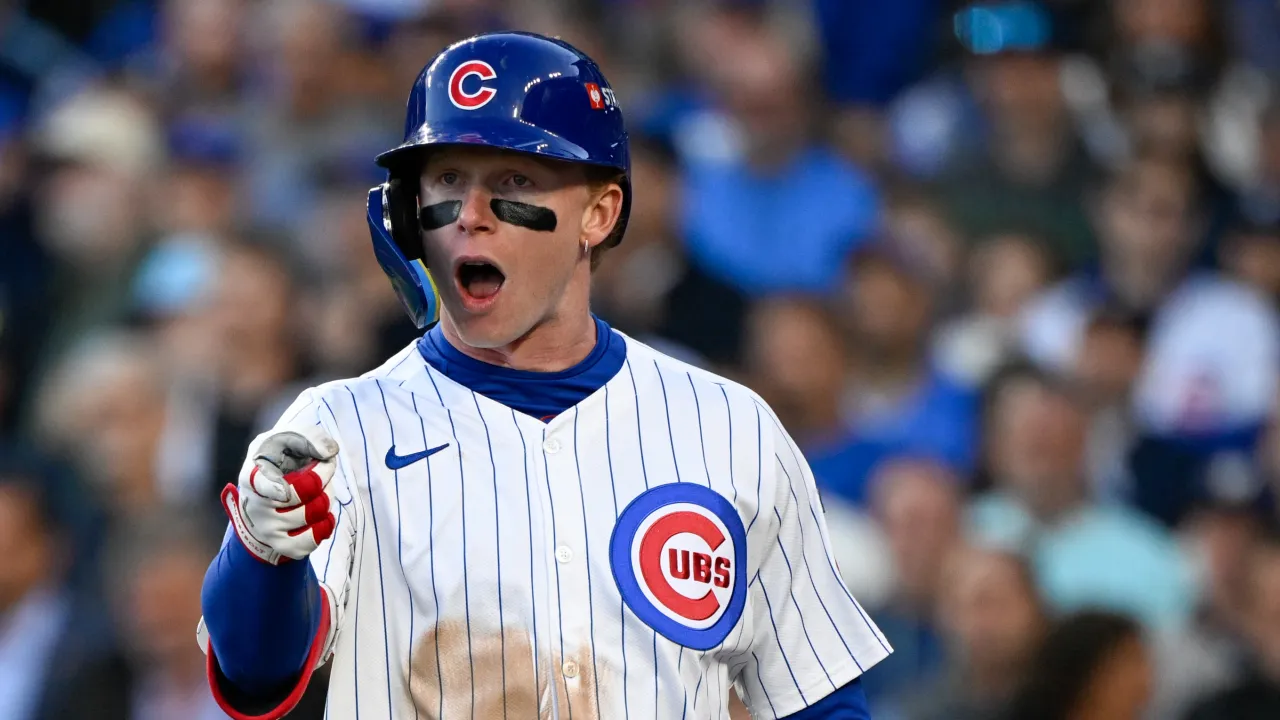
11. Pete Crow-Armstrong for Javier Baez, 2021
- Mets receive: Javier Baez, Trevor Williams
- Cubs receive: Pete Crow-Armstrong
The book on Pete Crow-Armstrong’s career is largely still unwritten, but the projected NL MVP just turned in what was by some metrics — including fWAR — the most valuable season in the last two decades by anyone not named Aaron Judge. A true five-tool player, Crow-Armstrong tied for the league-lead in home runs while stealing 41 bases and playing spectacular defense in centerfield for the Cubs.
“PCA” arrived on the North Side through a 2021 deadline deal that Mets fans will have a hard time forgetting. New York took a chance on Cubs rental Javier Baez but finished only 77-85, with Baez heading to the Tigers in free agency four months later. Crow-Armstrong, meanwhile, has become a superstar for the Cubs and is cost-controlled going forward after Chicago extended him ahead of 2026.
Baez played well down the stretch for the Mets in 2021, but his impressive 47 games were not at all worth what Crow-Armstrong has already given the Cubs.
MORE: Complete start times, schedule for 2026 World Series
10. Mookie Betts to Dodgers, 2020
- Dodgers receive: Mookie Betts, David Price
- Red Sox receive: Alex Verdugo, Jeter Downs, Connor Wong
The Mookie Betts trade still baffles Red Sox fans, who question why a big-market team would ever move on from a homegrown player destined for the Hall of Fame, but the blow might have been easier to take had the franchise made out better in the deal.
Originally constructed as a three-team deal with the Twins, the Dodgers split the trade into two separate transactions and sent three players to the Red Sox for Betts and David Price: Alex Verdugo, Jeter Downs and Connor Wong.
Verdugo became a useful player for four seasons in Boston, but he wasn’t anything more than that due to limited power. Wong actually remains with the Red Sox all these years later as a part-time catcher, while Downs never panned out and appeared in just 14 games for Boston.
Betts, meanwhile, won a World Series in his first season with the Dodgers and has since added two more, giving L.A. plenty of value with his versatility even when his bat isn’t at its best. Betts has twice finished as the NL MVP runner-up with the Dodgers and has now spent more time in Los Angeles than in Boston as a major-leaguer.
MORE: Why the Dodgers’ dynasty may be over

© Eric Canha-Imagn Images
9. Yordan Alvarez for Josh Fields, 2016
- Astros receive: Yordan Alvarez
- Dodgers receive: Josh Fields
The Dodgers have become a machine within the last decade, but there is at least one move they would like to have back. Seeking some bullpen help ahead of the 2016 trade deadline, L.A. acquired reliever Josh Fields from the Astros for a 19-year-old prospect who had signed an international deal barely a month earlier and hadn’t yet made his professional debut: outfielder Yordan Alvarez.
By 2019, Alvarez was the AL Rookie of the Year despite only playing 87 games. That was only a sign of what was to come, as Alvarez powered the Astros to a World Series win in 2022 and is expected to be named AL MVP in 2026.
Fields, meanwhile, posted a 2.79 ERA for the Dodgers down the stretch in 2016 and was a useful relief arm for L.A. over the following two seasons. His 2.0 WAR didn’t quite match what Alvarez has given the Astros, though, and it’s still jarring to see the Dodgers miss on a player like him.
“Looking back on it now, we obviously wish we would have said yes to other names they asked for before him,” team president Andrew Friedman later said.
MORE: Where Rays, Brewers rank among longest World Series droughts
8. Randy Johnson for Mark Langston, 1989
- Mariners receive: Randy Johnson, Gene Harris, Brian Holman
- Expos receive: Mark Langston, Mike Campbell
A young Randy Johnson had only made 10 starts for the Expos when he was traded to the Mariners in a five-player deal early in the 1989 season. Could the future of baseball in Montreal have been different if not for this deal? The same could be said about baseball in Seattle, where Johnson played a central role in the franchise’s 1990s surge.
Johnson spent parts of 10 seasons with the Mariners, earning five All-Star selections and AL Cy Young honors in 1995. While his best stretch came with the Diamondbacks, Johnson developed his reputation as a tall, flame-throwing left-hander in the Pacific Northwest.
Mark Langston, meanwhile, made only 24 starts for the Expos. He pitched well down the stretch in 1989, but it wasn’t enough for Montreal to even post a winning record as the team finished 81-81.

© William Liang-Imagn Images
7. Fernando Tatis Jr. for James Shields, 2016
- Padres receive: Fernando Tatis Jr., Erik Johnson
- White Sox receive: James Shields
James Shields was one of the last of his kind as a certified workhorse who helped both the Rays and Royals pull off improbable runs to the World Series. The White Sox were a bit misguided in thinking he could so the same for them in 2016, when they swung a midseason deal to land “Big Game James” from the Padres.
Shields, who struggled mightily in 2015, was abysmal down the stretch with the White Sox in 2016, posting a 6.77 ERA and nearly a -2 WAR across 22 starts. He was a touch better in 2017 and 2018, but the bar was low.
On the other side of the deal was 17-year-old Fernando Tatis Jr., who had yet to make his professional debut. Once he did start tearing up the minor leagues, the trade was declared a win for the Padres before Tatis even made his MLB debut. Tatis has since become a franchise cornerstone for San Diego, becoming an MVP finalist in 2021 and successfully re-inventing himself after a steroid suspension and non-baseball injury derailed his career.
There might be some who expected Tatis to be tap into his superstar potential even more than he has, but it became clear long ago that he was one of the great steals in MLB history for the Padres.
6. Christian Yelich for four prospects, 2018
- Brewers receive: Christian Yelich
- Marlins receive: Lewis Brinson, Monte Harrison, Jordan Yamamoto, Isan Diaz
The Marlins’ infamous tear-down after the 2017 season included trades of Giancarlo Stanton, Marcell Ozuna and Christian Yelich, with Yelich the last to go in late January 2018. Miami’s return for Stanton was understandably light because of the then-MVP’s contract, while the return for Ozuna turned out to be a major success with both Sandy Alcantara and Zac Gallen in the deal. The return for Yelich was a complete bust and unquestionably set the franchise back.
None of the four prospects the Marlins received for Yelich panned out. Lewis Brinson, the headliner, had a .573 OPS across 320 games in Miami, while Monte Harrison is actually playing college football at Arkansas as a 31-year-old today. Jordan Yamamoto’s 4.46 ERA across 15 starts in 2019 might actually be the highlight of the deal for the Marlins.
In Milwaukee, Yelich has become a franchise great. An MVP in 2018 and nearly an MVP again in 2019, Yelich has been beset by injuries at times in the 2020s but enjoyed a resurgence from 2023-25 and is now the team’s captain. The Brewers, meanwhile, have become a perennial postseason team with Yelich in the fold and have a chance to capture their first championship in franchise history.
MORE: Inside Jacob Misiorowki’s insane velocity

5. Miguel Cabrera to Tigers, 2007
- Tigers receive: Miguel Cabrera, Dontrelle Willis
- Marlins receive: Cameron Maybin, Andrew Miller, Burke Badenhop, Eulogio De La Cruz, Mike Rabelo, Dallas Trahern
The Marlins knew they were trading a star when they dealt Miguel Cabrera to the Tigers along with Dontrelle Willis after the 2007 season, but they were hoping headliners Cameron Maybin and Andrew Miller would help push the franchise into a new era of success.
While Willis didn’t pan out in Detroit, Cabrera became a Hall of Fame lock, earning back-to-back MVP awards and cementing himself as the best pure hitter in baseball at his peak.
Maybin carved out a 15-year career for himself, but his impact with the Marlins was minimal over three years. Miller, meanwhile, flopped as a starter with the Marlins, carrying a 5.89 ERA over 220 innings. It wasn’t until years after his tenure in Florida ended that he emerged as an intimidating relief weapon.
While Burke Badenhop became a solid reliever for a handful of years at different stops, no one from the Marlins’ return was worth the value Cabrera alone provided for the Tigers as he became a Detroit legend.
4. Jeff Bagwell for Larry Andersen, 1990
- Astros receive: Jeff Bagwell
- Red Sox receive: Larry Andersen
Hall of Famer Jeff Bagwell was born in Boston and drafted by the Red Sox, but he became an Astros legend after 15 seasons in Houston.
The Red Sox traded Bagwell for reliever Larry Andersen during the 1990 season, with Andersen pitching well late in the year for Boston but leaving in free agency the following winter. Bagwell would become one of baseball’s best contact hitters, earning Rookie of the Year honors in 1991 and batting .368 with a 1.201 OPS on his way to an MVP award in 1994.
Bagwell finished his career with 449 home runs and 2,314 hits despite injuries prematurely ending his career, and the Red Sox certainly wish he had the chance to become a hometown hero in Boston.

3. John Smoltz for Doyle Alexander, 1987
- Braves receive: John Smoltz
- Tigers receive: Doyle Alexander
John Smoltz was a Michigan native drafted by the Tigers, but he was off to a difficult start in 1987 when he was traded to the Braves for veteran starter Doyle Alexander. While Alexander pitched well down the stretch and got the Tigers to the ALCS, Smoltz unexpectedly became an ace in Atlanta.
One-third of a legendary trio atop the Braves’ rotation, Smoltz spent two full decades in Atlanta, winning a Cy Young Award and a World Series along with eight All-Star selections. Alexander was out of baseball just two years after the deal, while Smoltz was elected to the Hall of Fame after a career that came close to stretching into four different decades.
TSN Archives: Babe Ruth homers in Yankee Stadium opening (April 26, 1923)
2. Lou Brock for Ernie Broglio, 1964
- Cardinals receive: Lou Brock, Jack Spring, Paul Toth
- Cubs receive: Ernie Broglio, Bobby Shantz, Doug Clemens
A six-player deal involving Hall of Famer Lou Brock went down as one of the most lopsided deals in MLB history, and it came between the rival Cubs and Cardinals.
Brock, who had gotten off to an underwhelming start to his career in Chicago, instantly flipped a switch in St. Louis, starting with a stellar finish to the 1964 season. That was no fluke, as Brock would spend another 15 seasons with the Cardinals, earning six All-Star selections, leading the NL in stolen bases eight times and surpassing 3,000 career hits.
Ernie Broglio, the supposed headliner of the deal at the time, quickly flamed out with the Cubs, regressing from a top-of-the-rotation arm to an ERA well over 6.00 in both 1965 and 1966 before his career came to an end.

Getty Images
1. Babe Ruth sold to Yankees, 1919
- Yankees receive: Babe Ruth
- Red Sox receive: $100,000
It would be hard to find a transaction more lopsided than the “sale” of Babe Ruth, which would be better known today as a trade for cash considerations. The Red Sox were satisfied with the deal at the time, netting $100,000 plus a $350,000 loan for owner Harry Frazee, but Ruth would go on to become one of the most legendary figures in baseball history and is synonymous with the Yankees to this day.
A revolutionary figure in the sport, Ruth hit a record 54 home runs in his first season with the Yankees and would lead MLB in home runs eight more times, winning the World Series four times in New York and playing a central role in establishing the Yankees as baseball’s most prominent franchise.
The Red Sox, who won three championships with Ruth, didn’t win again until 2004, a drought that earned the moniker, “Curse of the Bambino” in a reference to the sale of Ruth.