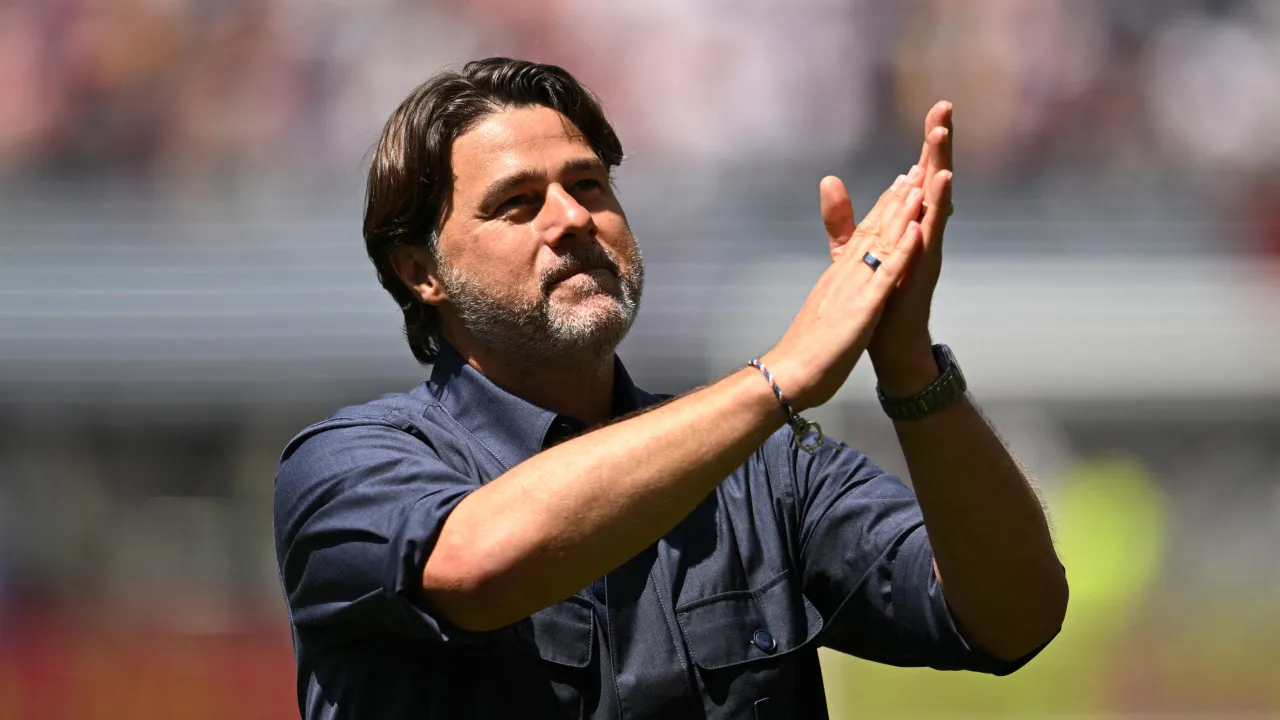
Mauricio Pochettino was always likely to leave U.S. Soccer before his latest contract was up.
The 54-year-old USMNT head coach is officially on his way out, jumping ship for flailing Premier League blue-blood Manchester United to replace Michael Carrick after the November international break.
His departure ends a complicated time in charge, one that came with many bumps in the road, but one that also brought many lasting changes to the sport in this country which should leave the U.S. federation in a better place than when he arrived.
Unable to resist the call of his dream job at Old Trafford, it’s time to break down how things went for the USMNT under Pochettino, both the positive and the negative, to summarize whether he was a successful hire by the federation.
MORE: What now for the USMNT? | Why Pep Guardiola isn’t a pipe dream for the USMNT
Mauricio Pochettino’s successes with USMNT
There was a whole lot of positive change that followed Mauricio Pochettino to the U.S. Soccer federation.
Following his first competitive matches, a pair of embarrassing defeats to Panama and Canada, Pochettino realized that the senior team needed a culture shift. In the aftermath of those two games, the Argentine spoke at length about how the players needed to re-learn what it meant to play for the national team, and how they needed to feel like they would give everything to represent their nation.
He was able to implement that culture shift almost immediately. Over the next year, Pochettino brought in a whole host of new players who were hungry to play for their country and who put pressure on the established stars in the first-team squad.
The effect was two-fold. Not only did this breathe new vigor into the regulars within the team, but it also expanded the player pool considerably. New faces like Alex Freeman, Max Arfsten, Sebastian Berhalter, and Diego Luna suddenly found themselves at the center of the talent pool, and the squad’s depth increased considerably as a result.
Additionally, Pochettino brought a new style of play to the team, one that fit the personnel exceptionally well and made them a force within CONCACAF. The former PSG and Chelsea boss realized that the biggest struggles for the U.S. came against teams of lesser quality, and he rectified that intensely. The 4-2-3-1 formation that Pochettino implemented, one which featured a vigorous press alongside positional fluidity on the wings, was an instant success, seeing the USMNT dominate teams with less talent.
Whereas the U.S. struggled under previous managers trying to break down the likes of CONCACAF minnows Jamaica and Costa Rica, the team now flexed its muscles against such opponents. Thanks to this, the team won three games at a World Cup for the first time, defeating Australia, Paraguay, and Bosnia and Herzegovina, all teams ranked lower.
After Pochettino’s extension was signed following the World Cup, a quartet of dominant friendly victories over Peru, Chile, Mexico, and Canada seemed to indicate the team was on the right trajectory to build towards the 2030 World Cup, where they could dream about elevating the team’s international standing once and for all.
All of this, of course, came at an exceedingly high price. Pochettino was hired for $6 million per year plus a $2.5 million signing bonus, much of which was underwritten by billionaire financiers Ken Griffin and Scott Goodwin, along with other partners. And yet, the federation recouped almost all of that money, as they were paid $12 million in total by Manchester United, who had to trigger Pochettino’s buyout clause to get him out of his USMNT contract early.
Mauricio Pochettino’s failures with USMNT
While Mauricio Pochettino managed to change the USMNT culture and dominate teams of lesser quality, the Argentine was not able to get the United States over the hump.
The federation has long stagnated on the world stage, dreaming of elevating its standing from the third tier of global football powers.
Since jumping from 20th to 10th in May of 2021, the USMNT has been ranked by FIFA between 10th and 18th for the last six years. You have to go back to 2006 to see the U.S. ranked inside the top 10 in the world. They have been eliminated in the Round of 16 in each of their last four World Cup appearances, and have only ever made the quarterfinals once in the modern era of the tournament.
With the chance to break that glass ceiling, Pochettino’s USMNT failed. They were thoroughly dominated by Belgium in the 2026 Round of 16, once again eliminated at that same stage, seeming to indicate a lack of real, tangible growth under the Argentine.
The competitive failures don’t end there, however. as Pochettino failed to win a single trophy with the United States. The USMNT was beaten in the 2024/25 CONCACAF Nations League, marking the first time the U.S. has failed to win that competition, and they also fell short in the 2025 Gold Cup, falling to Mexico in the final.
In the end, while Pochettino’s successes were many in theory, on the pitch he accomplished very little from a tangible perspective.
What is Mauricio Pochettino’s USMNT legacy?
While Pochettino lacked competitive success, each of his failures can be explained in a vacuum.
The CONCACAF Nations League defeat early in his tenure served as a wake-up call to both him and the federation as to the much-needed changes he would go on to make. He decided to bring a second-choice squad to the 2025 Gold Cup, leaving a host of first-team regulars at home to rest. And at the 2026 World Cup, Belgium were just plain better, while the U.S. players laid a collective egg.
There is no question that the World Cup loss stings. It was an abject failure at the worst possible time, with a chance to truly bring tangible change to the trajectory of the national team.
Yet boiling Pochettino’s time in charge to one match — regardless of the game’s individual importance — is simply reductive. Had Pochettino stayed for a full four-year cycle, that would be a fairer assessment of his time in charge, but having been there for just half the time, it is unfair to expect him to elevate the federation to such a massive leap.
Pochettino has brought considerable positive change to the federation at a time when it desperately needed his influence. Not only did he energize the player pool to rediscover its love for wearing the crest, but he deepened the talent within the first-team picture considerably, and brought along players who are well-positioned to help elevate the team’s global standing.
It’s a shame Pochettino isn’t staying to help see through the project he has set in motion, but there’s no doubt this project has the USMNT on the right track, and that would not have been possible without his influence. He has shown that U.S. Soccer can be a destination for world-class coaches, and his teary-eyed exit proved they can enjoy their work in this role.
He has laid the groundwork for the next head coach, and his buyout has recouped much of the investment U.S. Soccer made upon his hire. Now, the federation must nail his replacement to continue the work he started. If they flub this, it will prove a generational waste of the successes he began to build.