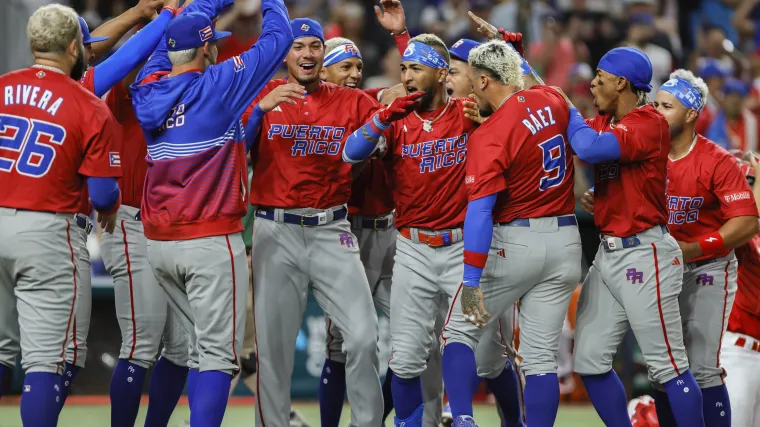
When the 2026 World Baseball Classic kicks off, the electric atmosphere surrounding Team Puerto Rico will make one thing clear: on the diamond, they answer to no one but their own flag.
As stars like Nolan Arenado and Edwin Díaz take the field in San Juan and Miami, a recurring question often arises for casual observers: If Puerto Rico is a U.S. territory, how can they compete as a separate “country” in international sports?
The answer lies in a unique blend of geopolitical status and a century-long baseball obsession.
Here’s why Puerto Rico can compete in the World Baseball Classic.
MORE: Full World Baseball Classic rosters
Is Puerto Rico a country?
Technically, Puerto Rico is not an independent country. It is an unincorporated territory of the United States.
People born in Puerto Rico are U.S. citizens, though they cannot vote in presidential elections while living on the island. Congress has the power to govern the territory, and the island uses the U.S. dollar, follows U.S. federal laws, and relies on the U.S. military for defense.
In sports, Puerto Rico is recognized as a separate “sporting nation” by the International Olympic Committee (IOC) and the World Baseball Classic. This allows the island to field its own national teams, independent of the United States.
MORE: Most World Baseball Classic wins by country
Is Puerto Rico part of the United States?
Puerto Rico is a self-governing, unincorporated territory of the United States. It is legally part of the U.S. and under the sovereignty of Congress, but it is not a state. Those born on the island are U.S. citizens who use the U.S. dollar and carry U.S. passports; however, they lack voting representation in Congress and cannot vote for the president unless they establish residency in one of the 50 states.
As of 2026, the island’s political future remains a central debate. In a November 2024 referendum, nearly 59% of voters chose statehood over independence or free association, continuing a decade-long trend of rejecting the current territorial status.
MORE: What to know about WBC eligibility rules
Why is Puerto Rico in the World Baseball Classic?
Puerto Rico competes in the World Baseball Classic because the tournament recognizes sporting nations rather than just sovereign countries. Under the rules of the World Baseball Softball Confederation (WBSC) and the International Olympic Committee, Puerto Rico has maintained its own independent National Olympic Committee since 1948. This “sporting sovereignty” allows the island to field its own teams in international competitions, separate from the United States, as long as it has a recognized governing body for that specific sport.
The inclusion is also driven by the WBC’s flexible eligibility rules, which prioritize cultural heritage and lineage. Players are eligible to represent Puerto Rico if they were born on the island, are residents, or have at least one parent or grandparent born there. This allows the massive Puerto Rican diaspora —including MLB stars born in the 50 states — to play for Puerto Rico.
MORE: Full WBC schedule and how to watch each game
Are Puerto Ricans American citizens?
Puerto Ricans are American citizens.
Anyone born in Puerto Rico is a U.S. citizen at birth. This was established by the Jones-Shafroth Act in 1917 and later clarified by federal statutes. As of 2026, they have held this status for over 100 years.
While they are citizens, their voting rights depend on where they live. If a Puerto Rican lives on the island, they cannot vote for President and have no voting representation in Congress. However, the moment they move to a state, they gain full voting rights just like any other citizen in that state.
MORE: What to know about Japan’s WBC history
Why isn’t Puerto Rico a state?
While Puerto Rico has repeatedly voted in favor of statehood, it remains an unincorporated territory because only the U.S. Congress has the legal power to admit a new state.
This transition is stalled by political concerns in Washington, where leaders often disagree on the potential impact two new senators and several representatives would have on the balance of power.
Consequently, despite the clear local mandate and the election of pro-statehood Governor Jenniffer González-Colón in 2026, the island’s status remains in a “symbolic” limbo without a binding act from Congress.