There is pressure on NFL officials each and every week, but that pressure is mounting in the playoffs — and not just because the stage is getting bigger.
The divisional round saw a few controversial calls, none more significant than the decision to award an interception to Denver Broncos CB Ja’Quan McMillian when Buffalo Bills WR Brandin Cooks believed he completed a catch that would have put his team in position for a game-winning field goal.
Many believe the call was correct. Some, including now-former Bills coach Sean McDermott, did not. Regardless, NFL officiating will be under even more of a microscope on championship weekend, as four teams battle for two spots in Super Bowl 60.
Here’s a complete look at the officiating crew for the AFC championship game between the Broncos and New England Patriots.
MORE 2026 NFL PLAYOFF NEWS:
Patriots vs. Broncos referees for AFC championship game
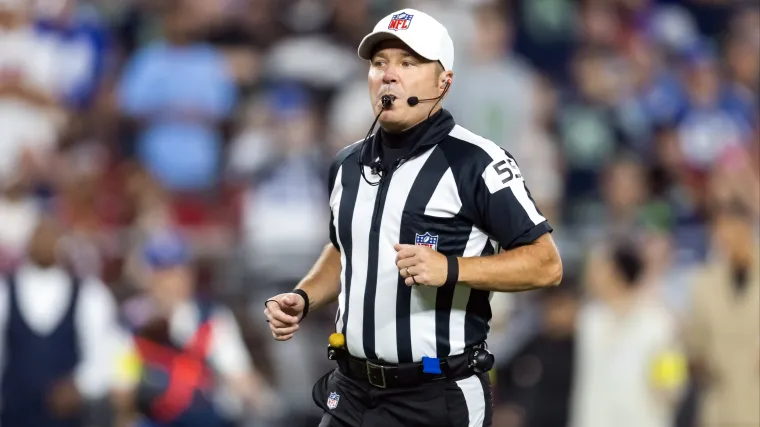
Alex Kemp will be the referee for the AFC championship game between the Patriots and Broncos. It’s Kemp’s first time working a conference championship game and his eighth playoff game overall. Here’s Kemp’s full crew:
| Position | Official |
|---|---|
| Referee | Alex Kemp |
| Umpire | Barry Anderson |
| Down Judge | Max Causey |
| Line Judge | Tom Eaton |
| Field Judge | Mearl Robinson |
| Side Judge | James Coleman |
| Back Judge | Brad Freeman |
Kemp was hired as a side judge in 2014 and earned a promotion to referee in 2018.
Kemp’s crew dished out 12.94 penalties per game in 2025, according to NFL Penalties, ranking seventh out of 17 crews. Officiating crews are mixed in the playoffs, however, so Kemp won’t be working with his typical crew.
The New England Patriots are 7-4 in games worked by Kemp’s crew since he became a referee in 2018, while the Denver Broncos are 5-2.
MORE: Can Broncos win the Super Bowl without Bo Nix?
NFL officials’ on-field responsibilities
Each official handles different responsibilities during a game, though they all work together in certain situations.
Here is the full break down of what each on-field official is tasked with during a game, via NFL Operations:
Referee
The referee lines up 15 yards behind the line of scrimmage in the offensive backfield. Also known as the crew chief, the referee wears the white hat as the leader of the crew who signals all penalties, counts the offensive players on the field and is the final authority on all rulings. Below are the referee’s assignments on run plays, pass plays, and special-teams plays.
- Run plays: Watches for false starts by the QB and RBs before the snap; watches the center, right guard and right tackle and the defenders engaged with them.
- Pass plays: Watches for false starts by the QB and RBs before the snap; watches the right guard and right tackle the defenders engaged with them; turns attention solely to QB as defense approaches; rules on roughing the passer, intentional grounding, offensive holding and makes the decision whether a loose ball is a fumble or incomplete pass.
- Special teams: Initiates the kickoff; watches the punter on punting plays, kicker and holder on kicking plays.
Umpire
Lining up primarily in the offensive backfield, opposite the referee and 15 yards behind the line of scrimmage, the umpire directly engages with and advises players during the game, reviews player equipment, counts the offensive players on the field, marks off penalty yardage and determines possession on piles for fumbles. Below are the umpire’s assignments on run plays, pass plays, and special-teams plays.
- Run plays: Watches for false starts on the center, left and right guard; watches the center, left guard and left tackle, and the defenders engaged with them, during the play.
- Pass plays: Watches for false stars on the center, left and right guard; watches the center, left guard and left tackle, and the defenders engaged with them, during the play; assists the referee with rulings around the QB.
- Special teams: Ensures kicking team is lined up correctly; on punts, watches for infractions by the center and two guards; on field goals/extra points, watches for infractions in and around the strong side of the defensive rush.
Down judge
Lining up on the sideline and looking directly down the line of scrimmage, the down judge directs the chain crew, oversees the line of scrimmage, watches for offside and encroachment, informs the ref of the current down, counts the offensive players on the field and rules on sideline plays on the nearest half of the field. Below are the down judge’s assignments on run plays, pass plays, and special-teams plays.
- Run plays: Watches for offside or encroachment; watches blockers/defenders on near side of field for penalties; monitors sideline; determines when/if a runner is out of bounds; marks runner’s forward progress.
- Pass plays: Responsible for specific receivers; helps rule whether pass is complete/incomplete; rules whether receiver was in bounds when catch was made; rules on offensive/defensive pass interference, defensive holding and illegal contact of eligible receivers; determines whether a pass was forward or backward; confirms passer was behind line of scrimmage when throwing.
- Special teams: Counts players on the receiving team; watches for false start, offside and encroachment
MORE: How much money do NFL referees make?
Line judge
Lining up on the sideline opposite the down judge and looking directly down the line of scrimmage, the line judge has similar duties, mostly consisting of watching for offside/encroachment, counting the offensive players and ruling on plays on the near half of the field. Below are the line judge’s assignments on run plays, pass plays, and special-teams plays.
- Run plays: Watches for false start, offside and encroachment; watches blockers and defenders on nearest side for penalties; monitors sideline on runs to near half of field; determines when runner is out of bounds; marks forward progress.
- Pass plays: Responsible for specific receivers; helps rule on whether pass is complete/incomplete; rules if receiver is out of bounds when catch is made; rules on offensive/defensive pass interference, defensive holding, illegal contact of receivers; determines if pass is forwards or backwards; makes sure passer is behind line of scrimmage when throwing.
- Special teams: Counts players on receiving team; watches line of scrimmage for false start, offside and encroachment.
Field judge
Lining up on the same sideline as the line judge but 20 yards behind the line of scrimmage in the defensive backfield, the field judge counts defensive players and watches wide receivers/defensive backs on the nearest side of the field. Below are the field judge’s assignments on run plays, pass plays, and special-teams plays.
- Run plays: Watches widest receiver blocking and looks for illegal use of hands or holding; determines if/when a runner on nearest side of the field goes out of bounds.
- Pass plays: Watches widest receiver on nearest side of the field and makes sure he is able to run his route without interference; rules on whether a pass to nearest side of the field is incomplete; rules on whether a receiver is in or out of bounds when he makes a catch; watches for pass interference.
- Special teams: Rules on blocking during punts; lines up under goal posts to rule on whether field goals and extra points are good.
MORE: Explaining the AI-generated Patrick Mahomes kissing ref memes
Side judge
Lining up on the same sideline as the down judge but 25 yards behind the line of scrimmage in the defensive backfield, the side judge serves as the primary timekeeper if the game clock malfunctions, signals to the ref when time expires for each quarter, counts defensive players and watches for penalties on receivers and their defenders. Below are the side judge’s assignments on run plays, pass plays, and special-teams plays.
- Run plays: Watches widest receiver’s blocking and looks for illegal use of hands or holding; determines if/when a runner on nearest side of the field goes out of bounds.
- Pass plays: Watches widest receiver on nearest side of the field and makes sure he is able to run his route without interference; rules on whether a pass to nearest side of the field is incomplete; rules on whether a receiver is in or out of bounds when he makes a catch; watches for pass interference, defensive holding and illegal contact of eligible receivers.
- Special teams: Ensures receiving team is lined up correctly; rules on blocking during punts; watches for snap infractions and illegal blocks.
Back judge
The back judge is positioned 30 yards behind the line of scrimmage in the defensive backfield. The back judge keeps track of the play clock and all TV breaks and counts defensive players. Below are the back judge’s assignments on run plays, pass plays, and special-teams plays.
- Run plays: Reads the initial action by the left guard, center and right guard; looks for defensive holding on first level; looks for offensive holding on second level.
- Pass plays: Goes to No. 2 or 3 receiver based on formation; goes to receiver where the pass is thrown; decides if receiver made legal catch; rules on offensive/defensive pass interference, defensive holding and illegal contact of eligible receivers.
- Special teams: Rules on fair catches; ensures kicking team is lined up correctly; lines up under goal posts to rule on whether field goals and extra points are good.