Curling is back.
The popular sport doesn’t get a ton of time in the spotlight, but every four years, the Winter Olympics bring out a lot of curling fans, and a lot of people who aren’t quite sure what the fuss is about.
As far as sporting events go, it’s certainly different.
Two teams want to slide granite stones across ice to get them closest to a bullseye target.
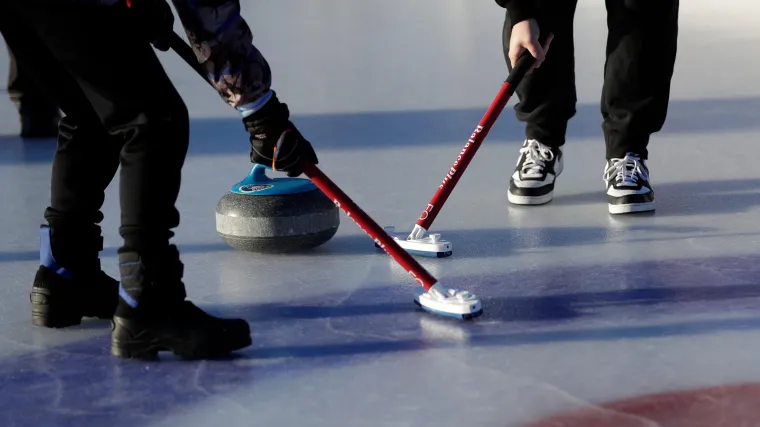
One team member slides the stone, and others sweep the ice while the team captain (skip) shouts out strategy.
It’s certainly an intense team operation. It just doesn’t have the same hallmarks as some of the more well-known Olympic sports.
MORE: How Lindsey Vonn plans to ski at the Olympics with a torn ACL
Why is curling an Olympic sport?
Curling was a part of the original Winter Olympics in 1924, and it is quite popular.
It only remained at the Olympics as a demonstration sport until 1998, when it became an official sport on the docket.
In reality, it checks off a lot of the boxes of what makes a sport a sport.
There is teamwork involved, and certainly a level of athleticism and skill to toss the granite stone correctly and then to maintain balance on the ice while using a tool to enhance the performance of the throw.
There’s plenty of strategy, including the skip’s directives essentially serving as coaching.
Sure, no one is running or jumping, and there’s no traditional ball, but it’s also not a bunch of people sitting at a table playing a card game, either.
The Summer Olympics include shooting events, which while a skill also require less athletic abilities overall than curling.
It’s much too popular to go anywhere now.
Curling is in the Winter Olympics to stay, and even if it only gets a spotlight every four years, it’s definitely a sport.
MORE: Ilia Malinin has a cool Olympic connection to Alex Ovechkin