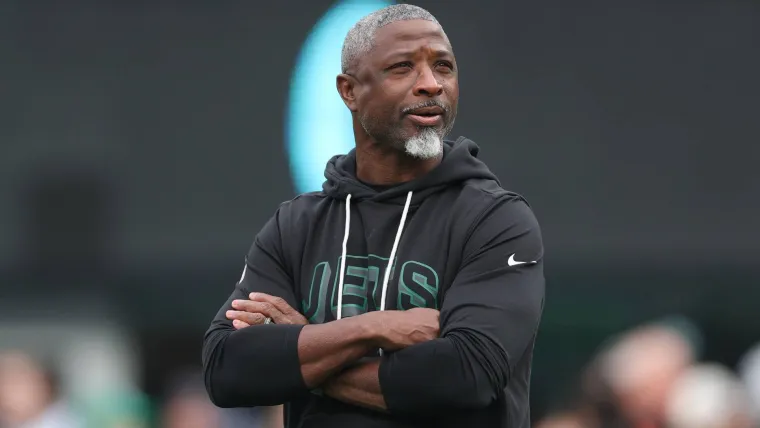
Aaron Glenn’s first season leading the New York Jets began with calm optimism and ended in organizational free fall. When training camp opened July 22, Glenn embraced the moment, walking the team facility alone, preparing for his first practice as a head coach.
By season’s end, that optimism had been replaced by a 3-14 record that now sits among the most damaging years in the franchise’s 66-season history.
Glenn inherited a team already mired in nine consecutive losing seasons. What followed only deepened the struggle. The Jets finished tied for the league’s worst record and posted a minus-203 point differential, the NFL’s worst since the 2021 Jacksonville Jaguars.
They dropped seven straight games to open the year and closed with five more losses, many of them lopsided. Even the three victories came against losing teams forced to start backup quarterbacks.
Mistakes compounded the roster shortcomings. Game management proved costly, as New York was outscored 119-59 in the final four minutes of each half. One of the clearest missteps came in Week 6, when Glenn allowed the clock to expire before halftime against Denver, bypassing a potential 53-yard field goal or final throw. The Jets lost 13-11.
Personnel choices also backfired. Glenn’s decision to sign quarterback Justin Fields and keep him in the lineup during an 0-7 start stalled progress. By the time Fields was benched in Week 12, the season had unraveled, leading to undrafted rookie Brady Cook starting the final four games and going winless.
Turmoil off the field tests Jets leadership and long-term patience
The Jets’ struggles were not confined to Sundays. The season was punctuated by organizational upheaval that few first-year coaches encounter. Defensive coordinator Steve Wilks and seven assistants were dismissed.
Homegrown cornerstones Sauce Gardner and Quinnen Williams were traded at the deadline. Franchise icon Nick Mangold died at 41 from kidney disease, and current player Kris Boyd survived a shooting in Manhattan that required multiple surgeries.
Despite the turbulence, Glenn maintained a steady presence. Players credited him for consistent communication and accountability, even as results deteriorated. Glenn acknowledged his own shortcomings late in the season, conceding the learning curve was steep and that several decisions needed correction.
Ownership remains publicly supportive. Woody Johnson, who signed Glenn to a five-year contract reportedly worth $12 million annually, has never dismissed a coach after one season. Internally, the Jets framed 2025 as a competitive rebuild, though the collapse forced a reset before Thanksgiving.
That reset continues into the offseason. New York explored adding veteran offensive help, including outreach to Jon Gruden, before firing offensive coordinator Tanner Engstrand. Former head coach Frank Reich has emerged as the leading candidate to stabilize the offense.
For Glenn, the margin for error is shrinking. History suggests coaches with three wins rarely recover. Whether stability and patience can outweigh results will define what comes next.